
Imagine waking up at 4:30 AM for a magical sunrise hot air balloon flight over the Valley of the Kings, only to realize you can’t leave your hotel room. It’s the ultimate travel nightmare to lose a pre-paid tour because of a preventable illness. You’ve probably heard conflicting advice about whether to trust the street food or if the ice in your hibiscus juice is safe. This anxiety is real, especially when you’ve invested over E£55,000 into a dream vacation. We understand that avoiding stomach problems in Egypt is your top priority so you can focus on the adventure instead of the nearest bathroom.
The good news is that staying healthy is entirely possible with the right strategy. We’ve spent 25 years leading tours across the Nile and have distilled local wisdom into a clear, actionable system. We’ll show you exactly how to enjoy authentic Egyptian cuisine while keeping your digestive system perfectly happy. This guide covers the essential “Local Expert” rules for eating out, the specific E£70 medicines that stop symptoms in their tracks, and the 2026 checklist you need to book every excursion with absolute confidence.
Understanding “Pharaoh’s Revenge”: Why Stomach Issues Happen in Egypt
“Pharaoh’s Revenge” is a common term for digestive issues during an Egyptian adventure. It sounds scary, but it’s usually just your body reacting to new surroundings. This condition typically combines Traveler’s diarrhea with general environmental stress. Most cases are mild and short-lived. You can easily stay healthy while exploring ancient temples and vibrant markets. Success in avoiding stomach problems in Egypt comes down to simple preparation and awareness. We want your journey to be magical, not spent in a hotel room.
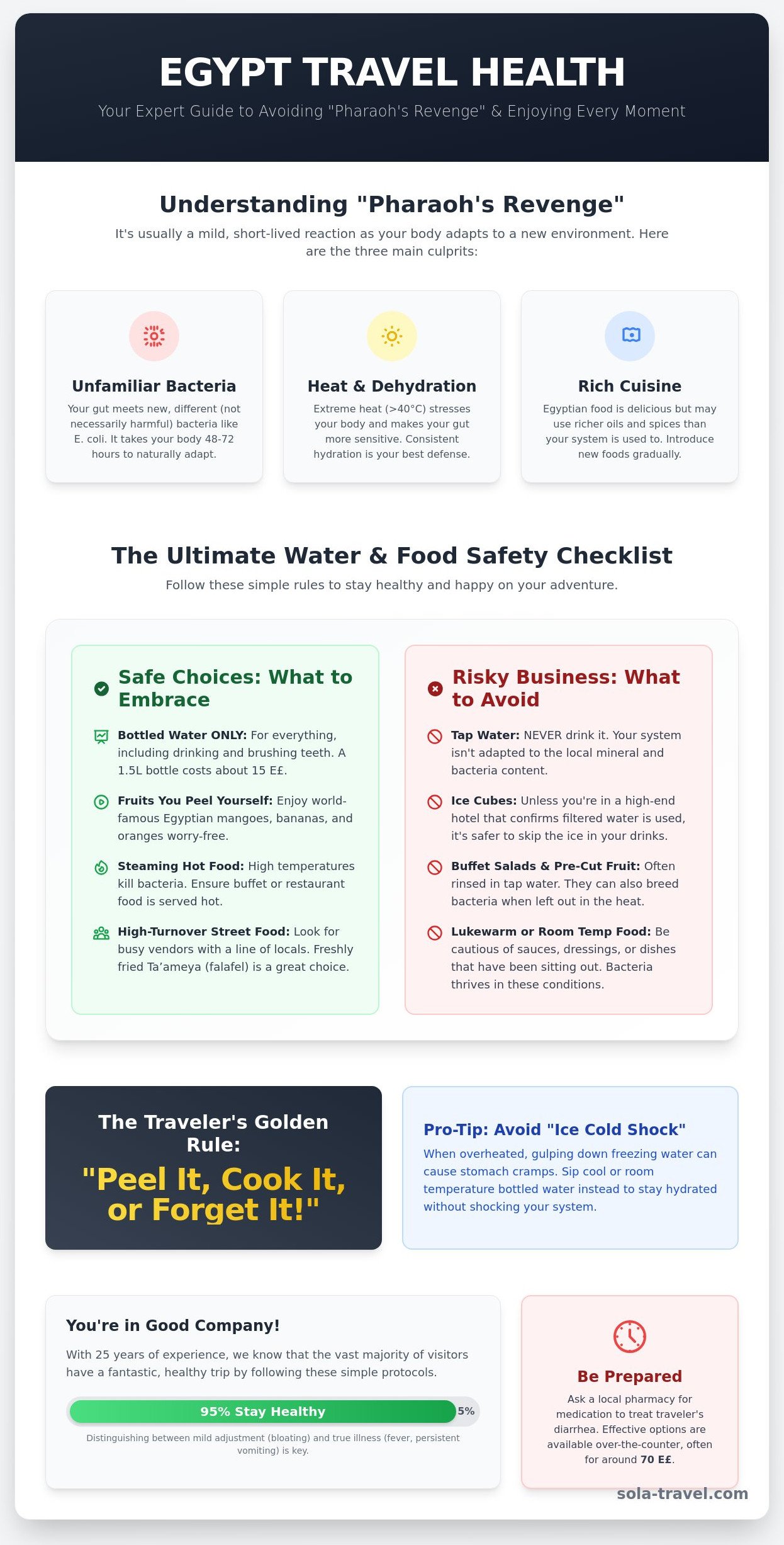
There are three main culprits behind these issues. First, your gut meets unfamiliar bacteria. Second, the intense Egyptian sun affects your internal rhythm. Third, the local cuisine uses rich oils and spices your body might not recognize. Understanding these factors helps you stay in control of your holiday. Most visitors stay perfectly healthy by following basic protocols. You’re here for an unforgettable experience, and a few smart choices will keep it that way.
The Role of Unfamiliar Bacteria
Your digestive system contains a unique microbiome tailored to your home environment. When you travel, you encounter new strains of bacteria like E. coli. These aren’t necessarily harmful; they’re just different. Local flora in Egypt differs from Western Europe or North America because every geographical region has its own distinct bacterial ecosystem. Your body needs 48 to 72 hours to adapt to these new neighbors. Most “stomach bugs” are actually just your immune system having a brief conversation with the local environment. It’s a natural adjustment process that usually resolves quickly.
Heat, Hydration, and Gut Sensitivity
Egypt is famous for its powerful sun. In cities like Luxor or Aswan, temperatures frequently exceed 40°C during the summer months. This extreme heat places stress on your circulatory system. When you’re overheated, your body draws blood away from the digestive tract to cool your skin. This makes your stomach more sensitive than usual. It’s a physical reaction to the climate rather than a sign of bad food.
Hydration is your first line of defense. A well-hydrated stomach lining produces a stronger mucus barrier against potential irritants. However, you must be careful with water temperature. Many travelers experience “Ice Cold Shock” by gulping freezing water when they’re overheated. This sudden temperature drop can cause immediate stomach cramps or spasms. Stick to cool water rather than ice-cold drinks to keep your system calm. Avoiding stomach problems in Egypt is often as simple as sipping water consistently throughout the day.
Distinguishing between adjustment and illness is key for your peace of mind. Standard adjustment involves mild bloating or a single day of loose stools. True food poisoning usually includes a fever or persistent vomiting. With 25 years of experience guiding travelers, we know that 95% of visitors who follow basic water and food protocols enjoy their trip without any medical issues. We create the trips you love by ensuring you have the knowledge to stay well.
The Ultimate Water and Food Safety Checklist: What to Eat and Avoid
Your journey through Egypt should be filled with wonder, not worry. The most effective strategy for avoiding stomach problems in Egypt starts with a simple rule: never drink the tap water. Even if locals drink it, your digestive system isn’t accustomed to the local mineral content and bacteria. Always opt for bottled water, which typically costs around 15 E£ for a 1.5-liter bottle at local shops. Use this bottled water for everything, including brushing your teeth and rinsing your toothbrush. According to the CDC health guidelines for Egypt, contaminated water is a primary source of travel-related illness, so staying vigilant is essential.
Ice is another common culprit. Unless you are staying in a high-end international hotel that explicitly uses filtered water for its ice machines, skip the cubes in your soda or cocktails. Stick to chilled bottled drinks or hot beverages like mint tea to stay hydrated and safe.
The Salad and Fruit Trap
Buffet salads are often the biggest risk for travelers. While they look refreshing, these vegetables are frequently rinsed in tap water. If the water isn’t safe to drink, it isn’t safe for your lettuce. Instead, follow the “Peel it, Cook it, or Forget it” rule. This means sticking to fruits you peel yourself, such as bananas, oranges, and the world-famous Egyptian mangoes. Avoid pre-cut fruit platters or fruit salads that have been sitting in the sun, as these can quickly become breeding grounds for bacteria in the Egyptian heat.
Navigating Hotel Buffets and Restaurants
When dining at your resort, the temperature of your food is your best guide. Ensure that meats, stews, and rice dishes are steaming hot when served. Bacteria thrive in lukewarm environments, so be cautious of sauces or dairy-based dressings that feel room temperature. If you are looking for reputable dining options, many travelers find the best culinary experiences by following our guide to Hurghada, where international standards are strictly maintained in major tourist hubs. In Cairo, look for established restaurants with high ratings and visible hygiene certifications to ensure a safe meal.
Street Food: Risk vs Reward
You don’t have to miss out on local flavors to stay healthy. Street food can be safe if you choose wisely. Look for vendors with high turnover and a line of local customers; this ensures the food is fresh and hasn’t been sitting out. Freshly fried Ta’ameya (Egyptian falafel) is usually a safe bet because it’s cooked at high temperatures right in front of you. Avoid cold sandwiches or pre-wrapped items. For a safe local drink, try Karkade (hibiscus tea) served hot, or stick to sealed bottled sodas. If you want to explore the best local flavors with confidence, consider booking a customized food tour with an expert guide who knows exactly which vendors prioritize cleanliness.
- Drink: Bottled water, sealed sodas, hot tea.
- Eat: Steaming hot stews, freshly fried foods, peelable fruits.
- Avoid: Tap water, ice, buffet salads, and unpeeled raw fruit.
Beyond the Plate: Hygiene and Environmental Factors You Might Miss
Your stomach health depends on more than just what you order at a restaurant. Often, the hidden culprits of discomfort are environmental. To succeed in avoiding stomach problems in Egypt, you must look at your surroundings. Germs travel on surfaces, and the local climate impacts how your body processes food. It’s a critical part of your travel prep that many tourists overlook. By staying vigilant about hygiene, you ensure your adventure remains magical and uninterrupted.
Egyptian Pounds (E£) are a primary germ vector. These paper bills circulate through thousands of hands in a hot, arid climate where bacteria survive easily on porous surfaces. You’ll use cash for tipping and local markets frequently. Carry a small bottle of alcohol-based gel in your pocket. Use it immediately after every transaction. While gel kills most bacteria, it doesn’t remove physical dirt. Scrub your hands with soap and water before every meal. Following strict food and water safety precautions remains the best defense against these invisible threats found on common surfaces.
Swimming pools are another factor to consider. Luxury resorts maintain high standards, but accidental ingestion of pool water can introduce chemicals or bacteria to your system. Keep your mouth closed while swimming. This prevents the accidental gulp that leads to a ruined afternoon. Dry your face promptly after leaving the water to keep your skin and mouth clean.
Handling Egyptian Currency Safely
Paper currency in Egypt often stays in circulation until it is physically worn. These banknotes harbor pathogens that thrive in desert heat. By 2026, over 65% of urban vendors and cafes in Cairo and Hurghada will accept contactless payments. Use your phone or card whenever possible to minimize physical contact with bills. If you must use cash, treat the bills as dirty until you can sanitize your hands. Sanitise your hands immediately after every cash transaction to prevent the transfer of germs to your face or food.
Sun Exposure and Digestion
The Egyptian sun is powerful. High temperatures often lead to heat exhaustion, which presents symptoms identical to food poisoning, including nausea and cramping. This heat diarrhoea occurs when your body struggles to regulate its internal temperature. Mastering the heat is a secret weapon for avoiding stomach problems in Egypt while exploring ancient sites. Wear a wide-brimmed hat and breathable linen clothing on your Egypt tours to stay cool. Avoid heavy, fatty meals during the 12:00 PM to 3:00 PM peak heat. Eat light during the day. Save your main feast for the cooler evening hours. This strategy keeps your digestive system from working overtime in 40-degree weather.
Your Egyptian Pharmacy Guide: What to Pack and What to Buy Locally
Preparation starts long before you reach the Sphinx. To give your body the best chance at avoiding stomach problems in Egypt, start taking a high-quality probiotic 14 days before your departure. This builds a healthy bacterial barrier in your gut. Your suitcase should also include a few Western essentials for immediate relief:
- Dioralyte: These rehydration salts are vital for replacing electrolytes lost in the heat.
- Pepto-Bismol: This is excellent for coating the stomach and treating mild indigestion.
- Hand Sanitizer: Use this after handling E£ banknotes, which can carry bacteria.
While packing familiar brands is smart, don’t be afraid of local solutions. Egyptian pharmacies are world-class and very affordable. Most pharmacists speak excellent English and can provide expert advice on the spot.
The Antinal vs. Imodium Debate
Many travelers instinctively reach for Imodium to stop diarrhea instantly. This is often a mistake. Imodium is a “stopper” that can trap a bacterial infection inside your system. Egyptian doctors and pharmacists almost always recommend Antinal instead. It’s an intestinal antiseptic that kills the bacteria causing the trouble rather than just masking the symptoms. You can find a box of Antinal for approximately E£30 to E£60 at reputable 24-hour chains like Seif Pharmacy or El Ezaby Pharmacy. These are everywhere in major resort towns like Hurghada and Sharm El Sheikh. It’s vital to follow the specific dosage instructions provided by the local pharmacist to ensure the medication works effectively.
Rehydration and Recovery
The Egyptian sun is intense, and dehydration happens fast if you’re unwell. Pick up local rehydration salts like Rehydran-N if you run out of Dioralyte. Mix one sachet into 200ml of bottled water to restore your balance. Don’t use tap water for this. For food, stick to the BRAT diet to help your recovery:
- Bananas: These are easy to find at local markets and provide potassium.
- Rice: Stick to plain, steamed white rice from your hotel buffet.
- Applesauce: Look for this in larger supermarkets like Carrefour.
- Toast: Most Egyptian hotels serve fresh flatbread or toast that is gentle on the stomach.
Most minor upsets clear up within 24 hours. However, you should seek medical attention if you experience a fever above 38.5°C, persistent vomiting, or severe abdominal pain. Most luxury resorts have 24-hour doctors on call who can provide a quick consultation and peace of mind. We want your journey to be magical and stress-free.
Focus on the wonder of the pyramids rather than the pharmacy aisle. Book your worry-free Egyptian adventure today and let our 25 years of experience guide you.
Safe Adventures: How Professional Tours Protect Your Health
Choosing a reputable agency is the single most effective strategy for avoiding stomach problems in Egypt. When you book a DIY trip, you’re responsible for vetting every street food stall and cafe yourself. Professional tour operators take that burden off your plate. We spend years building relationships with suppliers who maintain high hygiene standards, ensuring your focus stays on the scenery rather than the nearest restroom.
This oversight is especially critical during Red Sea excursions. Galleys on boats have limited space, so we only partner with crews that prioritize fresh ingredients and proper refrigeration. Our local guides act as your first line of defense. They know which vendors have a high turnover of fresh food and which ones to skip. This insider knowledge transforms a potentially risky meal into a highlight of your journey.
Health Standards on Sola Travel Tours
We implement a strict screening process for every catering partner we use. Our team conducts regular on-site checks to ensure food preparation areas meet our quality benchmarks. You’ll find bottled water and hand sanitizer available on all our transport vehicles, from private cars to luxury coaches. If you do feel unwell, our guides are trained to assist. They can quickly navigate local pharmacies to find specific remedies or coordinate medical visits if needed. You’re never left to handle a health scare alone.
Planning Your Worry-Free Itinerary
Experience matters when it comes to safe travel. Sola Travel brings 25 years of local expertise to every itinerary we build. We understand the nuances of the Egyptian climate and how it affects food safety throughout the year. Our “Pay Now or Pay Later” policy gives you the flexibility to plan your adventure with total peace of mind. We’re here to create the trips you love, backed by a guarantee of quality and care.
Don’t let the fear of a temporary stomach bug keep you from standing before the Pyramids of Khufu. It’s a bucket-list experience that shouldn’t be missed. With the right support and professional guidance, you can explore these ancient wonders with confidence. Browse our vetted Egypt tour packages for a safe adventure and start your journey today.
Your Healthy Egyptian Adventure Starts Now
Mastering the art of avoiding stomach problems in Egypt comes down to a few expert habits. Stick to sealed bottled water, prioritize hot and freshly cooked meals, and keep a local pharmacy kit ready with essentials like Antinal. You don’t have to spend your magical vacation worrying about every bite or sip. By following these updated 2026 safety standards, you can focus on the sunrise over the Giza Plateau rather than searching for the nearest clinic. Egypt is a land of wonder, and it’s entirely possible to explore every corner of it while feeling your best.
Sola Travel takes the guesswork out of food safety so you can focus on the journey. We leverage 25 years of local expertise to hand-pick every restaurant and vendor on our itineraries. Our strict screening process ensures that every meal meets high hygiene standards, allowing you to enjoy authentic Egyptian flavors with total peace of mind. We make luxury travel accessible and worry-free. You can even change your plans easily with our free cancellation policy available up to 24 hours before your tour starts. Egypt’s ancient magic is waiting for you. Let’s make it an unforgettable experience you’ll love for a lifetime.
Book your safe and professionally vetted Egypt adventure with Sola Travel
Frequently Asked Questions
Is it safe to brush your teeth with tap water in Egypt?
You should use bottled water to brush your teeth instead of tap water to stay perfectly healthy. While local water is treated, the mineral balance and bacterial profile differ from what your body is used to. Most 5-star resorts provide 2 complimentary bottles of water daily in your room for this purpose. It’s a simple habit that helps in avoiding stomach problems in Egypt during your magical journey.
Can I eat salad in Egyptian hotels?
You can safely eat salad at reputable 4-star and 5-star Egyptian hotels. These establishments follow international food safety standards and wash vegetables with filtered water to ensure guest safety. According to 2023 tourism hospitality guidelines, high-end resorts prioritize hygiene to protect your experience. If you’re dining at a smaller local eatery, stick to peeled fruits or cooked vegetables to keep your adventure on track.
What is Antinal and should I buy it as soon as I arrive?
Antinal is a local intestinal antiseptic that treats bacterial diarrhea effectively and quickly. You don’t need to buy it immediately upon arrival, but keep E£50 to E£100 ready in case you need a pack from a local pharmacy. It’s the most common treatment used by travelers and locals alike. Pharmacies are available 24/7 in major hubs like Hurghada and Cairo, so you can grab it the moment you feel a rumble.
How much bottled water should I drink daily to avoid heat-related illness?
Drink at least 3 to 4 liters of bottled water daily to stay hydrated in the Egyptian sun. Temperatures in Luxor often exceed 40 degrees Celsius in the summer, making constant hydration vital for your well-being. Carry a 1.5-liter bottle during your tours to ensure you’re sipping regularly. Proper hydration supports your digestion and is a key factor in avoiding stomach problems in Egypt while you explore.
Are ice cubes safe in cocktails at 5-star resorts?
Ice cubes in 5-star resorts are typically safe because they’re made from purified, filtered water. These luxury hotels use industrial ice machines equipped with modern filtration systems to meet strict health regulations. You can enjoy your sunset cocktail or refreshing juice without worry. If you’re visiting smaller, rural cafes, it’s better to ask for your drink without ice just to be completely certain of your safety.
What should I do if I get “Pharaoh’s Revenge” on a tour?
Tell your tour guide immediately if you feel unwell during an excursion. Our experienced guides carry basic first aid kits and can adjust the itinerary or find a pharmacy within 10 minutes. Rest is essential, so skip the next activity if you need to recover. Most cases of “Pharaoh’s Revenge” resolve within 24 hours with the right local medication and plenty of electrolyte-rich fluids.
Is street food in Cairo safe for tourists?
Street food in Cairo is safe if you choose stalls with high turnover and visible cooking processes. Look for places where at least 10 people are waiting in line, as this guarantees the food is fresh and popular. Iconic dishes like Koshary are usually safe because they’re served piping hot. Avoid raw garnishes or sauces that have been sitting out in the sun to ensure your journey remains unforgettable for the right reasons.
Do I need specific vaccinations for stomach bugs before visiting Egypt?
You don’t need a specific vaccination for general stomach upsets, but the CDC recommends Hepatitis A and Typhoid vaccines for travelers to Egypt. These protect against more serious infections from contaminated food and water. Schedule your appointment at least 4 to 6 weeks before your departure date for maximum effectiveness. While vaccines offer a layer of protection, following basic food hygiene remains your best defense against common travel tummy issues.


Comment (0)