
Imagine standing before the stunning Al-Sahaba Mosque in Sharm El Sheikh, feeling a sudden wave of anxiety because you aren’t sure if your attire meets the local standard. It’s a common moment of doubt for many of the 14.9 million travelers who visited the country in 2023. You want your journey to be magical, yet the fear of accidentally offending someone or fumbling the baksheesh system can feel daunting. We understand that feeling, and we’re here to ensure your adventure is nothing but joyful.
Mastering cultural etiquette in Egypt for tourists is the secret to unlocking a deeper, more authentic experience. Whether you’re navigating the bustling Khan el-Khalili or enjoying a luxury Nile cruise, knowing the local customs helps you build genuine rapport with the people you meet. This guide promises to turn your anxiety into confidence by teaching you exactly how to dress, act, and communicate. We’ll explore the nuances of tipping in E£, the correct way to visit religious sites, and the art of friendly bargaining so you can enjoy every second of your unforgettable Egyptian journey.
Understanding Egyptian Culture: Why Etiquette is Your Best Travel Companion
Egyptians call their hospitality “Karam.” It’s more than just being polite; it’s a fundamental national identity that defines every interaction. When you master cultural etiquette in Egypt for tourists, you transform from a simple visitor into a respected guest. Understanding the social fabric is essential for a smooth, magical journey. A deep dive into Understanding Egyptian Culture shows how thousands of years of history shape today’s social norms. By 2026, with Egypt expecting to welcome over 15 million annual visitors, knowing these unwritten rules helps you stand out as a conscious traveler. It allows you to bypass common tourist frustrations and protects you from opportunistic “street guides” who target those looking lost or unsure.
Karam isn’t just about being friendly. It’s the reason a shopkeeper might spend twenty minutes giving you detailed directions or why a stranger might offer to share their food on a train. Respecting these gestures opens doors to authentic, off-the-beaten-path experiences that aren’t found in any brochure. When you show you’ve done your homework, locals treat you with a higher level of sincerity and warmth. This mutual respect is your best tool for navigating the bustling streets of Cairo or the quiet villages along the Nile.
The Warmth of Egyptian Hospitality
Expect to be offered tea, known locally as *shai*, frequently during your Egypt tours. Whether you’re negotiating for a rug in Khan el-Khalili or waiting for a boat in Aswan, a glass of hot, sweet tea is a standard sign of welcome. If you’re full or in a hurry, don’t just say no. Always decline an invitation by placing your right hand over your heart. This gesture communicates “thank you, but I’m satisfied” in a way that’s deeply respectful. You’ll also hear the phrase “Inshallah” (God willing) dozens of times a day. It reflects a cultural reliance on faith and patience. It’s not a sign of being vague; it’s simply how Egyptians acknowledge that the future is ultimately out of their hands. Embrace this slower pace, and you’ll find your stress levels dropping instantly.
Modern Egypt in 2026: Tradition Meets Progress
By 2026, the Egyptian landscape has reached a fascinating turning point. The Grand Egyptian Museum (GEM) is now a fully established global icon, blending 5,000 years of history with ultra-modern, tech-savvy hospitality. While major cities like Cairo and Alexandria are becoming increasingly cosmopolitan with high-speed rail and 5G connectivity, traditional values remain the bedrock of society. Following cultural etiquette in Egypt for tourists is just as relevant in a sleek Cairo skyscraper as it is in a rural field.
You’ll need to balance different vibes depending on your location:
- Urban Hubs: In Cairo, modest dress and polite greetings like “Sabah el Kheir” (Good morning) go a long way.
- Red Sea Resorts: Places like Hurghada and Sharm El Sheikh are relaxed and accustomed to international styles, yet they still value respectful interactions with staff.
- Ancient Sites: At the Pyramids or Luxor, firm but polite boundaries help you manage the energetic atmosphere of local vendors.
Understanding these nuances ensures your 2026 adventure is both exciting and deeply respectful of the local way of life.
Navigating the Dress Code: Modesty Standards for Every Setting
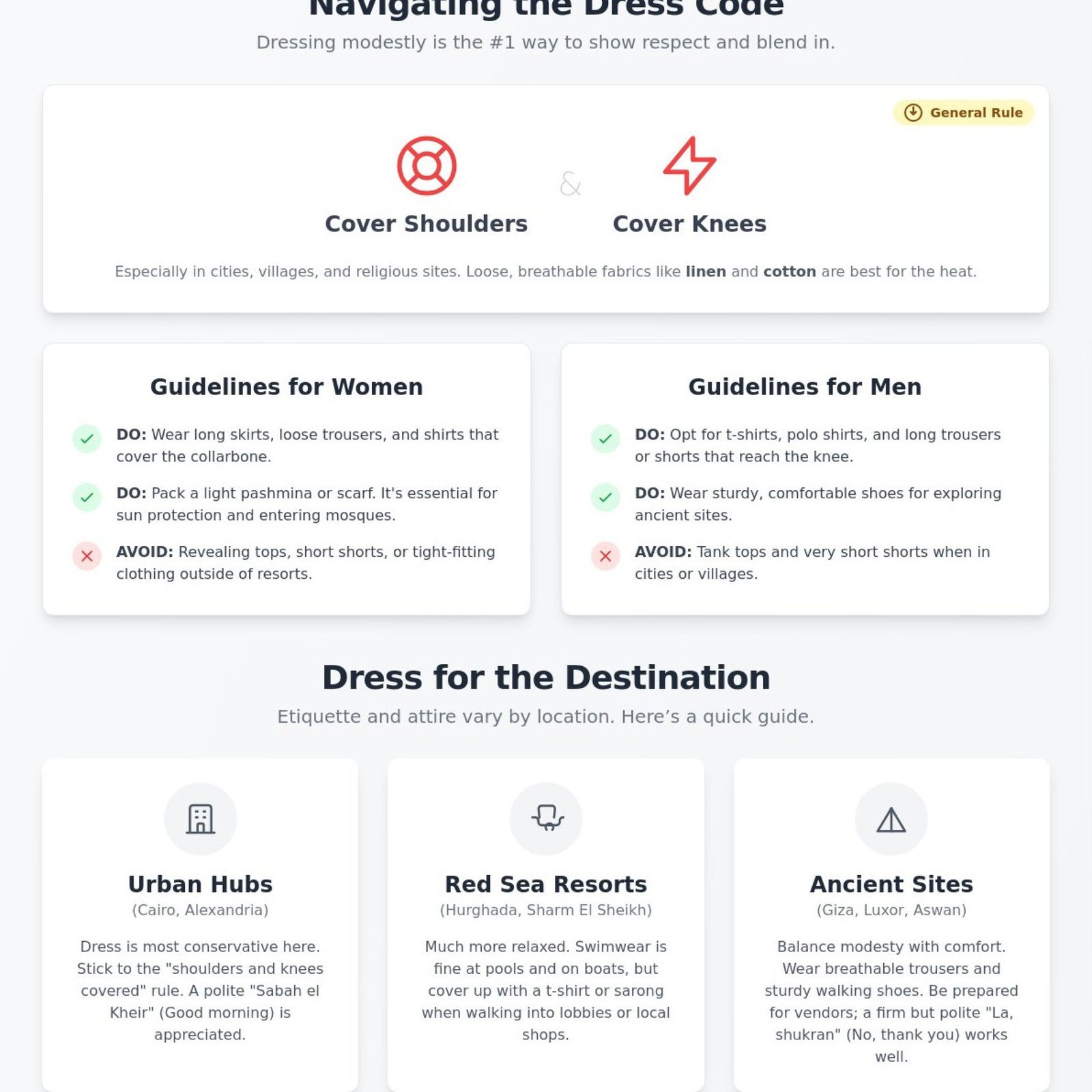
Respecting local customs makes your journey magical. Egypt is a conservative society, yet it remains incredibly welcoming to visitors. Dressing modestly is the most effective way to master cultural etiquette in Egypt for tourists. The general rule is simple: cover your shoulders and knees in all public spaces. This small gesture signals respect for local traditions and helps you blend in while exploring busy streets or rural villages.
The Egyptian sun is intense, often reaching above 35°C in the summer months. You’ll want loose-fitting, breathable fabrics to stay cool. Linen and cotton are your best friends here. They provide a natural barrier against the heat while keeping you ventilated. Men should avoid tank tops and very short shorts once they leave the beach areas. For women, carrying a light pashmina or scarf in your day bag is essential. It’s a versatile tool for sun protection, extra coverage, or entering religious sites on a whim.
What to Wear at Ancient Temples and Mosques
Visiting the Pyramid of Khufu or the Giza plateau requires a balance of comfort and modesty. While these are archaeological sites, they’re also national treasures. Wear sturdy walking shoes and breathable trousers. When you visit active places of worship, the rules tighten. You must remove your shoes before entering any mosque; look for the designated shoe racks or attendants at the entrance. Female travelers should cover their hair with a headscarf when entering mosques. This practice is a sign of reverence for the local faith. For official updates on local customs and safety, consult the U.S. Department of State travel advice before your departure.
Resort Wear vs. City Attire: Finding the Balance
Coastal vibes in the Red Sea differ significantly from city life in Cairo or Luxor. Swimwear is perfectly acceptable at your hotel pool or during a snorkeling cruise. However, always cover up when walking from the beach to a local shop or hotel lobby. A simple sarong or t-shirt makes a world of difference. If you’re planning a transition from the relaxed shores of Hurghada to a Cairo day trip, pack a change of clothes. The capital requires a more formal approach to modesty.
- Packing for the city: Long skirts, linen trousers, and shirts that cover the collarbone.
- Packing for the resort: Standard swimwear, flip-flops, and light sundresses.
- The transition: Keep a “city kit” in your backpack with a light jacket and long pants for evening arrivals in Cairo.
Following these guidelines ensures you feel confident and respected throughout your adventure. Ready to see these wonders for yourself? Explore our bespoke Egypt tours and travel with the experts who know the culture best.
The Art of Social Interaction and the Baksheesh System
Socializing in Egypt is a deliberate and warm process. You’ll quickly notice that rushing into a business question or a request without a proper greeting is seen as disrespectful. Egyptians value the human connection behind every transaction. Always use your right hand when eating, giving, or receiving items. This is a non-negotiable part of cultural etiquette in Egypt for tourists because the left hand is traditionally reserved for personal hygiene. While Egypt is incredibly welcoming, keep public displays of affection to a minimum. Modesty is highly respected. Keeping physical contact low in public spaces helps you show respect for local values and ensures everyone feels comfortable.
Greetings and Body Language Essentials
Mastering the Tipping Culture (Baksheesh)
Baksheesh is more than just a tip. It’s a social contract and a gesture of gratitude that helps support the local service economy. In 2026, the local economy makes these small contributions even more vital for service workers. Always carry a stack of small Egyptian Pound (EGP) denominations. You don’t want to be stuck with only large E£200 notes when you need to thank someone for a small favor. It’s about being prepared and showing you value the effort provided.
- Public Restrooms: E£10 to E£20 is the standard for the attendant providing paper.
- Hotel Porters: E£50 per bag is a fair and appreciated rate for 2026.
- Restaurant Staff: A 10% to 15% tip is expected, even if a service charge is already on the bill.
- Tour Drivers: E£100 to E£200 for a full day of professional service.
Don’t feel pressured to tip for every single interaction or if someone is being overly pushy. If a street vendor is too persistent or someone offers a service you didn’t ask for, a polite but firm “La Shukran” (No thank you) is perfectly acceptable. Mastering these nuances of cultural etiquette in Egypt for tourists ensures you feel like a respected guest rather than just a visitor. We want your adventure to be as seamless and magical as possible.
Dining, Bargaining, and Public Conduct: Practical Do’s and Don’ts
Mastering cultural etiquette in Egypt for tourists turns a standard vacation into a deep, respectful connection with the local people. Egyptians are famous for their warmth and hospitality, but they also value specific social traditions. Whether you’re sitting down for a meal in Cairo or browsing a market in Aswan, your behavior dictates the level of respect you’ll receive in return. Following these rules for cultural etiquette in Egypt for tourists ensures you’re welcomed with open arms rather than seen as a distant visitor.
Table Manners and Accepting Invitations
Mealtime in Egypt is a communal event. It’s about sharing. You’ll often find large platters placed in the center of the table for everyone to enjoy. Always wait for your host to start eating before you begin your own meal. If you’re invited into a local home, you’ll likely be offered a glass of hot mint tea or strong coffee; always accept at least one cup to show your appreciation for their hospitality.
- The Right Hand Rule: Use your right hand for eating, passing dishes, or dipping bread. The left hand is traditionally reserved for personal hygiene, so using it for communal food is considered impolite.
- The “Full” Signal: Don’t clean your plate entirely. If you finish every scrap, your host will think they haven’t provided enough food; leaving a tiny portion signals you’re full and satisfied.
- Salt and Seasoning: Avoid adding salt to your food before tasting it. It can be seen as a slight to the cook’s skills.
Respectful Haggling in the Souks
Shopping in the souks is a social game, not a combat. Merchants expect you to bargain, and they enjoy the back-and-forth. Start by offering about 50% of the initial asking price. Use humor and a smile to reach a “best price” that works for both of you. Aggression or anger will quickly end the transaction, while a friendly joke often leads to a better deal.
Keep in mind that if you agree on a final price in E£, it’s culturally expected that you complete the purchase. Walking away after a long negotiation over a few pounds is seen as disrespectful. If you aren’t serious about buying, it’s better to keep your browsing brief and polite.
Photography Etiquette and Privacy
Capturing memories is part of the journey, but privacy is highly valued. Always ask permission before taking photos of locals, especially women. A simple nod or asking “Mishkin?” (May I?) goes a long way. If someone poses for you, a small tip of 20 E£ to 50 E£ is often expected and appreciated as a gesture of thanks.
Strict regulations exist regarding where you can point your lens. Never take photos of military installations, bridges, police officers, or government buildings. Since a 2022 decree, street photography for personal use is generally allowed, but professional-looking gear may still attract attention from authorities. Always check for “No Photography” signs inside historical sites, such as the inner chambers of the Hatshepsut Temple, where flashes can damage ancient pigments.
Friday Conduct and Prayer Times
Friday holds deep religious significance as the holy day in Egypt. Most shops and local businesses close during the midday prayer times, typically between 12:00 PM and 2:00 PM. You’ll hear the call to prayer echoing from minarets across the city. Plan your shopping and sightseeing around these hours, as the streets often become quiet while people attend the mosque. By mid-afternoon, the cities come back to life with a vibrant, festive energy.
Experience the magic of Cairo and Luxor with our expert local guides. Explore our best-priced Egypt tours and save up to 50% on your next adventure.
Explore Egypt Confidently with Sola Travel’s Expert Guides
Egypt is a land of immense wonder, but its social norms can feel complex for first-time visitors. Mastering cultural etiquette in Egypt for tourists is much easier when you have a local expert by your side. At Sola Travel, we believe your journey should be magical and stress-free. We create the trips you love by combining our 25 years of experience with a deep respect for Egyptian traditions. Booking our Egypt tour packages means you don’t have to navigate these nuances alone. We handle the logistics so you can focus on the adventure. Our commitment to sustainable tourism ensures your visit supports local communities in Cairo, Luxor, and Hurghada.
Join us for an unforgettable journey where luxury meets local authenticity. We offer a “Best Price Guarantee” and a strict screening process for all our tours. Whether you are looking for a sunrise hot air balloon ride or a private snorkeling cruise, we ensure every detail aligns with local customs while providing maximum comfort. You’ll feel like a welcomed guest rather than just a visitor.
How Our Local Guides Bridge the Cultural Gap
Our guides are more than just historians; they are your cultural bridge. One of the biggest hurdles for travelers is “baksheesh” or tipping. In Egypt, this is a standard social expectation, but knowing how much to give can be confusing. Our guides manage group baksheesh for services like porterage and site assistance, saving you from constant calculations. They also help with:
Bespoke Experiences Designed with Respect
We design bespoke experiences that respect both your comfort and local heritage. Our itineraries are customized to your preferences, ensuring you feel confident in every setting. Through our long-standing local relationships, we provide access to exclusive experiences that typical tour groups miss. This might include private dinners with local families or after-hours access to specific monuments.
Sola Travel makes adventure accessible and affordable. You can book your next adventure today and save up to 50% on select excursions. We offer total flexibility with a “Pay Now Or Pay Later” option and free cancellation up to 24 hours in advance. Don’t let the fear of the unknown hold you back. Start your journey with Sola Travel and experience the true heart of Egypt with confidence and style.
Start Your Egyptian Adventure with Confidence
Mastering cultural etiquette in Egypt for tourists ensures your 2026 journey is seamless and respectful. You’ll find that simple gestures, like dressing modestly in historic districts or understanding that a small tip of E£ 20 is standard for helpful service, go a long way in building rapport. These small details transform a standard vacation into a deep, authentic connection with the local community. We’ve spent 25 years building local expertise to help you navigate every social nuance from the Pyramids to the Red Sea. We create the trips you love by handling the logistics while you soak in the wonder of the Nile. Our commitment to your peace of mind includes a Best Price Guarantee on all excursions and free cancellation up to 24 hours before your tour starts. It’s your time to explore the ancient world with a guide who treats you like family. Explore our best-priced Egypt tours and book your adventure today! We can’t wait to show you the magic of our home.
Frequently Asked Questions
Is it safe for solo female tourists to travel in Egypt in 2026?
Yes, Egypt is safe for solo female travelers who follow local norms and stay in well-traveled areas. Egypt ranked 65th on the 2023 Global Peace Index, showing a steady improvement in security over the last five years. You’ll find that understanding cultural etiquette in Egypt for tourists, like dressing modestly in cities, helps you navigate the country with confidence and ease.
What should I do if I am invited to an Egyptian’s home for dinner?
Accept the invitation with a smile and bring a high-quality gift like chocolate or traditional Egyptian sweets. Always remove your shoes before entering the living area unless your host tells you otherwise. Use your right hand for eating and drinking, as the left hand is traditionally considered unclean. Leave a small amount of food on your plate to show your host provided more than enough to satisfy you.
Can I drink alcohol in public in Egypt?
No, you cannot drink alcohol in public streets or parks as it is prohibited by Law 63 of 1976. Consumption is strictly limited to licensed hotels, restaurants, and bars. While Egypt is a Muslim-majority country, it’s quite easy to find alcoholic beverages in tourist hubs like Hurghada or Cairo. Just ensure you keep your drinking within these designated zones to respect local laws and traditions.
How much should I tip my tour guide and driver in Egypt?
You should tip your tour guide between E£300 and E£500 for a full day of service. For drivers, a tip of E£150 to E£250 per day is standard and much appreciated. Tipping, known locally as baksheesh, is an essential part of the service economy. In restaurants, check your bill for a service charge, but it’s polite to add an extra 10 percent directly for the waiter.
Are there specific rules for visiting the Pyramids of Giza?
You must never climb the stones of the Pyramids, as this is illegal and carries heavy fines to protect these 4,500 year old structures. Purchase your tickets in advance through the Ministry of Tourism and Antiquities digital portal to avoid long queues. Following the cultural etiquette in Egypt for tourists means being firm but polite with vendors and only using official site guides for your tour.
What are the most important Arabic phrases for tourists to know?
Is it okay to wear shorts in Hurghada or Sharm El Sheikh?
Yes, shorts and swimwear are perfectly acceptable within resort boundaries and on the beaches of Hurghada and Sharm El Sheikh. These coastal cities are much more relaxed than the traditional neighborhoods of Cairo or Alexandria. However, you should still carry a light cover-up or sarong for when you leave the beach to visit local shops or pharmacies to maintain a respectful appearance.
What happens if I accidentally break a cultural rule?
Don’t panic because Egyptians are incredibly hospitable and usually overlook honest mistakes made by visitors. If you realize you’ve done something wrong, a sincere apology and a quick correction of your behavior are all that’s needed. Most locals understand that you’re still learning their customs. Your effort to respect their traditions is what matters most during your unforgettable adventure through this historic land.


Comment (0)