
That “ancient” stone scarab you just spotted for 50 E£ is almost certainly a factory-made resin import from a warehouse thousands of miles away. It’s a common trap in the bustling markets of Cairo and Luxor. You want a piece of the Pharaohs to take home, but the aggressive vendors and rows of identical trinkets make it hard to choose. We know you’re looking for something real, not a mass-produced disappointment that breaks before you even clear customs.
Discover exactly what are the best souvenirs from Egypt to ensure your home is filled with authentic treasures rather than cheap plastic. Sola Travel has spent 25 years helping travelers master these vibrant bazaars with total confidence. We’ll show you how to identify genuine hand-woven carpets, find the richest hibiscus tea, and bargain for fair prices in Egyptian Pounds. This guide breaks down the top high-quality items for 2026, the specific shops where locals buy, and the secrets to shopping like a seasoned pro.
What Are the Best Souvenirs from Egypt in 2026?
Exploring the vibrant bazaars of Cairo or the quiet, dust-filled workshops of Luxor is a highlight of any Egyptian adventure. In 2026, the local craft scene is experiencing a massive revival, driven by a new generation of artisans who blend modern sustainability with techniques used for millennia. You’ll find that the markets are more than just shopping hubs; they’re living museums. Much of what you see on the shelves today is directly inspired by ancient Egyptian art, ensuring your keepsakes carry a deep historical weight.
When you ask what are the best souvenirs from Egypt, the answer depends on your eye for quality. The difference between mass-produced “tourist kitsch” and authentic treasures is stark. While a plastic pyramid might cost E£50, it lacks the soul of a hand-carved stone statue or a piece of hand-loomed textile. 2026 is the perfect year to visit because the Egyptian Ministry of Tourism has recently certified over 500 local workshops to ensure travelers get genuine, high-quality goods. This initiative makes it easier than ever to bring home something that supports the local economy and lasts a lifetime.
Gifting is a cornerstone of Egyptian hospitality. The tradition of “Hadeya” means that a gift isn’t just an object; it’s a bridge between cultures. Whether you’re buying for yourself or a loved one, these items represent the warmth of the people you’ll meet. With Sola Travel’s 25 years of experience on the ground, we’ve identified the specific items that truly capture the magic of the Nile.
The Definition of an Authentic Egyptian Souvenir
Authenticity starts with the raw materials. Genuine Egyptian cotton is famous for its long-staple fibers, making it the softest and most durable in the world. Look for the official gold seal on textiles to ensure they aren’t synthetic blends. In Luxor, master carvers still use local alabaster, which glows with a soft, translucent light when a candle is placed inside. Identifying the “Made in Egypt” mark is crucial in 2026, as it guarantees the item was produced under fair labor conditions. Supporting these local creators is a core part of our philosophy because it preserves the heritage of the communities we visit. We believe your journey should leave a positive footprint on the local economy.
Quick Checklist: Top Items at a Glance
- Spices and Hibiscus Tea: Visit the spice markets for fresh “Karkadeh” (hibiscus). High-quality dried petals usually cost around E£180 to E£250 per kilogram. Don’t forget the aromatic cumin and saffron.
- Intricate Jewelry: Personalized silver cartouches are a timeless choice. A solid silver piece with your name in hieroglyphics typically starts at E£1,200, depending on the weight and craftsmanship.
- Hand-woven Textiles: Search for “Khayamiya” or tent-maker applique work. These vibrant, hand-stitched patterns have been used to decorate ceremonial tents for centuries. A small, high-quality wall hanging can be found for approximately E£600.
Finding what are the best souvenirs from Egypt is about looking past the bright lights of the main tourist strips. Real treasures are found in the side alleys and the dedicated artisan villages. By choosing wisely, you don’t just take home a piece of stone or fabric; you take home a story of a culture that has fascinated the world for over 5,000 years.
The Big Five: Iconic Treasures You Cannot Leave Without
You can’t visit the Land of the Pharaohs without bringing a piece of its magic home. When travelers ask what are the best souvenirs from Egypt, they’re usually looking for items that carry the weight of history and the skill of local hands. Egypt’s 5,000 year legacy lives on through its master artisans. From the bustling alleys of Cairo to the quiet workshops of Upper Egypt, you’ll find treasures that define luxury and heritage. These items represent more than just shopping; they’re a connection to the ancient world that you can actually touch and feel.
Genuine Papyrus Art
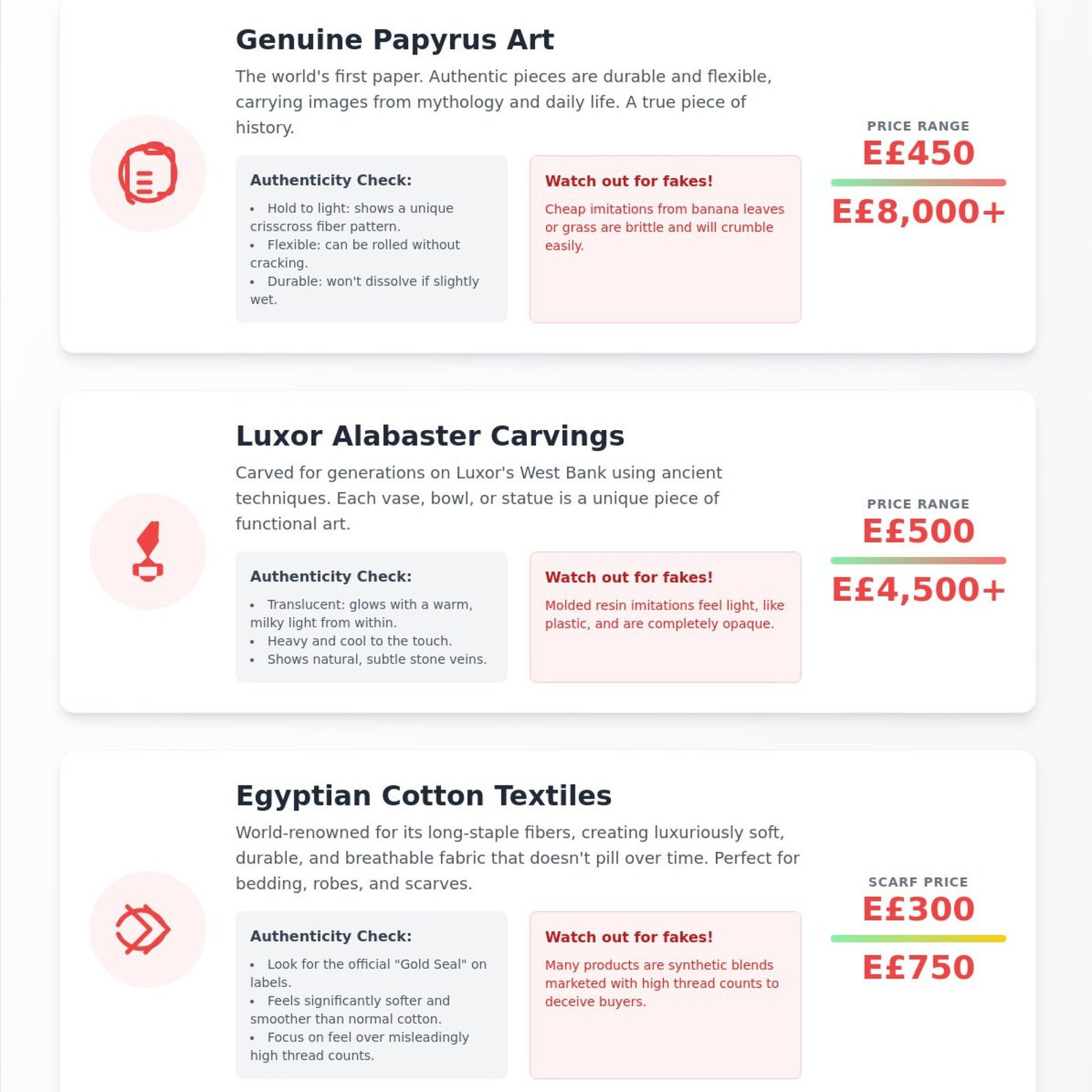
Papyrus is the worlds first paper made from the Cyperus papyrus plant. Authentic pieces are incredibly durable and flexible. You can roll them up for your flight without fear of them cracking or crumbling. Cheap imitations made from banana leaves or dried grass feel brittle and break easily. To verify the quality, hold the sheet up to a bright light. Real papyrus shows a distinct, irregular crisscross pattern of fibers. It also won’t dissolve if you get it slightly wet. We always recommend buying from certified institutes to ensure you’re getting the real deal. Our Sola Travel guides help you find reputable galleries where every piece comes with a certificate of authenticity. Expect to pay between E£ 450 and E£ 8,000 depending on the size and the artist’s level of detail.
Luxor Alabaster and Stone Carvings
The West Bank of Luxor remains the global capital of alabaster. Local families have mined and carved these stones for generations, using techniques passed down since the time of the New Kingdom. Real alabaster is naturally translucent. Hold a candle or your phone’s flashlight inside a vase to see the stone glow with a warm, milky light. Factory-molded resin imitations feel like plastic and lack the heavy, cool weight of natural stone. Cairo’s status within the UNESCO Creative Cities Network highlights the importance of protecting these traditional crafts against mass-produced imports. If you want to see these masters at work, our Luxor Day Trips offer an up-close look at the hand-carving process. A small, hand-carved bowl typically starts around E£ 500, while large intricate vases can reach E£ 4,500.
Egyptian Cotton and Bedding
Egyptian cotton is legendary because of its long-staple fibers. These longer fibers create a smoother, stronger yarn that won’t pill over time. Don’t get distracted by high thread counts alone; a 400-thread-count genuine Egyptian cotton sheet feels significantly better than a 1000-thread-count synthetic blend. High-end bed sheets are a classic choice, but you can also find beautiful “Galabeyas” (traditional robes) and scarves. A quality cotton scarf usually costs between E£ 300 and E£ 750. Look for the “Gold Seal” on labels to guarantee the cotton was grown in the Nile Delta. It’s a smart way to bring a touch of Egyptian luxury into your daily life back home.
Gold and silver cartouches are the ultimate personalized gift. These oval frames contain your name written in ancient hieroglyphs. Egyptian gold is typically 18k or 21k, which gives it a much richer yellow color than what you might find in Europe or the UK. Every piece of jewelry sold in Egypt must have a government hallmark. Use a magnifying glass to check for this tiny stamp before you finalize your purchase. It’s your guarantee of purity and value. When you’re considering what are the best souvenirs from Egypt, a gold cartouche is a timeless investment that lasts forever.
Transporting these treasures requires a bit of planning. Wrap stone carvings in several layers of bubble wrap and pack them in your carry-on luggage to avoid the rough handling of checked bags. Most shops provide sturdy cardboard tubes for papyrus and carpets, which makes them very easy to carry onto a plane. If you’re buying something large, many reputable shops in Cairo and Luxor can arrange international shipping with insurance. We create the trips you love by making sure every detail, including your shopping adventures, is seamless and stress-free.
Red Sea Specialties: Shopping in Hurghada and Marsa Alam
Shopping in the Red Sea Riviera offers a refreshing change from the crowded alleys of Cairo. While the capital focuses on heavy brass and antiques, Hurghada and Marsa Alam specialize in coastal treasures and desert crafts. If you’re wondering what are the best souvenirs from Egypt while staying by the sea, look toward the Eastern Desert and the aromatic essence shops. You’ll find items here that reflect the nomadic heritage of the region rather than just the Pharaonic past.
The shopping experience differs significantly from Luxor or Cairo. Coastal vendors are often more relaxed. In Hurghada, the El Dahar Souq is the heart of authentic commerce. Approximately 80% of the city’s residents shop here for textiles and spices. It’s the best place to find genuine prices without the “tourist tax” often found in hotel gift shops. In contrast, the Hurghada Marina offers a luxury experience with fixed prices, which is perfect if you prefer a stress-free environment. Marsa Alam is more secluded, making its local markets smaller but filled with rare items from the deep south near the Sudanese border.
Ethical shopping is a priority in this region. The Red Sea is a protected marine park. It’s strictly illegal to export sea shells, coral, or dried marine life under Law 4 of 1994. Customs officials at Hurghada International Airport use advanced scanners to detect these items, and fines can reach E£15,000. Instead of taking from the sea, choose man-made replicas of Ancient Egyptian art. These stone or resin carvings capture the spirit of the Red Sea’s history without damaging its fragile ecosystem.
Perfume Oils and Essence
Egypt has led the world in aromatherapy for over 4,000 years. Ancient priests used concentrated oils for both sacred rituals and medicinal healing. Today, Hurghada is famous for its “perfume palaces.” Popular scents include Lotus, Papyrus, and the famous “Secret of the Desert” blend. These aren’t standard perfumes; they’re pure essences. They don’t contain alcohol, so they won’t dry out your skin or evaporate in the heat. A 50ml bottle of high-quality essence typically costs between E£500 and E£900. When you’re deciding what are the best souvenirs from Egypt for friends, these oils are ideal because they’re compact and last for years. Always ask for a “burn test” to ensure the oil is pure and not diluted with vegetable oil.
Bedouin Handicrafts and Jewelry
The Eastern Desert is home to the Ababda and Bishari tribes. Their handicrafts are a world away from the mass-produced items in city bazaars. You can find hand-woven baskets made from sturdy palm fronds and vibrant beaded jewelry that uses traditional geometric patterns. Buying these items directly supports the local desert communities. Many travelers discover these unique pieces during Desert Safari Tours, where they can meet the artisans in person. You should also look for organic medicinal herbs like “Habak” (wild desert mint) or “Marmaraya” (Sinai sage). A large bag of authentic desert tea usually costs around E£60. It’s a healthy, lightweight souvenir that brings the flavor of the Egyptian wilderness back to your home kitchen.
The Art of the Deal: How to Shop Like a Local
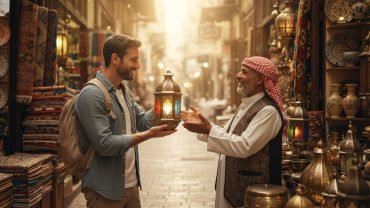
Walking through the vibrant alleys of Khan el-Khalili feels like stepping back in time. It’s a sensory explosion of color and sound. You’ll find yourself asking what are the best souvenirs from Egypt while surrounded by shimmering lamps and aromatic spices. To get the best value, you must master the art of negotiation. In Egypt, the price on the tag is often just a conversation starter. Local shopkeepers expect a friendly back and forth. It’s a cultural tradition that builds rapport. This interaction is about more than money; it’s a social exchange that defines the Egyptian shopping experience.
By 2026, market prices have stabilized, but you still need a baseline for fair value. A hand-painted papyrus typically ranges from E£250 to E£550 depending on size and detail. Intricate brass lanterns often start at E£900 but can be negotiated down based on the complexity of the metalwork. Knowing these benchmarks prevents overpaying. If a vendor asks for E£2,500 for a simple cotton scarf, you know it’s time to start the “Fasala” process. Always look for the weight and craftsmanship of an item before discussing the cost.
Bargaining 101: A Step-by-Step Guide
Start your negotiation by offering exactly 50% of the initial asking price. Don’t be shy. The vendor might act shocked, but it’s part of the performance. Aim to meet somewhere around 65% of the original quote. If the price stays too high, use the “walk away” technique. Data from local tour guides suggests that 85% of the time, the seller will call you back with a better offer as you reach the next stall. Keep the mood light and use humor. A smile goes further than a stern face in a Cairo bazaar.
Currency and Payments in 2026
Egypt’s digital transformation has accelerated significantly. As of early 2026, approximately 78% of established souvenir shops in Cairo and Hurghada accept contactless card payments or mobile wallets. However, traditional souks still prioritize Egyptian Pounds (EGP). Always carry small denominations like E£10 and E£20 bills. These are essential for “Baksheesh” or small market tips. While some high-end galleries might accept Euro, you’ll always get a better exchange rate paying in local E£. Avoid using foreign currency for small purchases because the change given back often uses a poor conversion rate.
Sales tactics can feel intense. Sellers often use phrases like “Special price for you” or “My friend, come see.” Don’t let it overwhelm you. They’re just trying to make a living. If you aren’t interested, keep walking. If you are interested, don’t show too much excitement. A neutral expression helps maintain your leverage during the deal. Egyptians are famous for their hospitality; sometimes a shopkeeper will offer you tea. It’s okay to accept the tea even if you don’t buy anything, but a small purchase is a nice gesture of thanks if you’ve spent thirty minutes in their shop.
Ready to test your bargaining skills? Book an expert-led shopping tour to discover the hidden gems of Cairo’s oldest markets and find the most authentic treasures.
Experience the Best Markets with Sola Travel
Finding what are the best souvenirs from Egypt shouldn’t feel like an overwhelming chore. We’ve spent 25 years perfecting the art of the Egyptian market experience. Our team knows that navigating the bustling streets of Cairo or the vibrant souks of Hurghada requires more than just a map. It requires an insider who understands the local rhythm. A guided tour is your secret to a stress-free experience. We handle the logistics, the transportation, and the language barriers, allowing you to focus entirely on the craftsmanship and the culture.
Our strict screening process is the backbone of our reputation. We don’t just walk into any shop we see. We’ve personally vetted over 120 ateliers and workshops across the country to ensure they meet our high standards. Only about 15% of local vendors pass our quality and ethical sourcing checks. This means when you buy a piece of jewelry or a hand-woven rug, you’re getting an authentic product. We focus on shops that support local artisans, ensuring your money stays within the community while you take home a piece of history.
Value is just as important as quality. Sola Travel provides a Best Price Guarantee that extends even into the traditional markets. While haggling is a local tradition, it can be exhausting for many visitors. Our guides act as your personal advocate. They ensure you pay the correct local rate in E£. For instance, a genuine 10ml bottle of concentrated perfume oil typically ranges from E£ 250 to E£ 450. We ensure you aren’t charged double that just because you’re a guest in our country. We want you to feel confident in every purchase you make.
We believe in combining sightseeing with the best shopping opportunities. Why choose between the Great Pyramids and a spice market? Our itineraries blend these experiences seamlessly. You can explore the Giza Plateau in the morning and be sipping traditional mint tea while browsing for hand-carved alabaster by 3:00 PM. This approach saves you time and ensures you don’t miss the chance to pick up items that truly represent the regions you visit. Our experts help you decide what are the best souvenirs from Egypt based on your specific interests and travel style.
From Hurghada to Khan el-Khalili
Take an unforgettable journey from the Red Sea coast to the heart of Islamic Cairo. Our Cairo Excursions bring you directly to Khan el-Khalili, a historic bazaar dating back to 1382. While most tourists stick to the main thoroughfare, we take you into the hidden side streets. You’ll find 100-year-old workshops where copper is still beaten by hand. These are the hidden gems where the most authentic treasures are found, far away from the mass-produced trinkets.
Bespoke Shopping Experiences
For those seeking something truly unique, our customized luxury tours cater to high-end jewelry and art collectors. Whether you’re looking for 18k gold cartouches or museum-grade papyrus replicas, we provide private access to Egypt’s finest artisans. The Sola Travel promise is simple: we create the trips you love with authentic treasures that last a lifetime. Don’t settle for the ordinary. Explore our tours and book your Egyptian adventure today to see the difference 25 years of expertise makes.
Bring Your Egyptian Adventure Home in 2026
Your journey through Egypt’s vibrant markets offers more than just shopping; it’s a chance to hold 5,000 years of history in your hands. Whether you’re hunting for hand-carved alabaster starting at E£450 or seeking intricate Red Sea beadwork from Marsa Alam, the variety is staggering. Remember that local artisans value the art of the deal, where a friendly negotiation can often save you 25% or more on your final price. When you’re deciding what are the best souvenirs from Egypt for your home, prioritize authentic papyrus and heavy Egyptian cotton that stands the test of time.
Sola Travel ensures your shopping experience is both authentic and stress-free. With 25 years of local expertise, we lead you directly to the craftsmen who keep these ancient traditions alive today. We guarantee the best price on all excursions, giving you more E£ to spend on your favorite treasures. If your schedule shifts, it’s simple; we offer free cancellation up to 24 hours before your trip begins. We create the trips you love by focusing on quality and value every step of the way.
Explore Egypt Tours with Sola Travel and discover the magic for yourself. Your next unforgettable treasure is waiting in the heart of the bazaar.
Frequently Asked Questions
Is it illegal to take certain souvenirs out of Egypt?
It’s strictly illegal to export any genuine antiquity older than 100 years or any natural resources like coral and seashells from the Red Sea. Law No. 117 of 1983 protects Egypt’s heritage; if you’re caught with these items at Cairo International Airport, you face heavy fines or even imprisonment. Stick to modern replicas and handmade crafts to keep your journey magical and stress-free. Always ask for a receipt for high-end replicas to prove they aren’t protected artifacts.
How much should I expect to pay for a silver cartouche in 2026?
You should expect to pay between E£1,500 and E£3,500 for a high-quality 925 sterling silver cartouche in 2026. This price varies based on the silver’s weight and the complexity of your custom hieroglyphics. Shopping at reputable boutiques in Khan el-Khalili ensures you get the best value for these bespoke treasures. Always ask for the weight in grams to confirm you’re paying a fair market rate; 10 grams is a standard weight for a durable piece.
Can I buy authentic Egyptian cotton in Hurghada?
You can definitely find authentic 100% Giza cotton in Hurghada if you shop at specialized textile boutiques. Look for the official Egyptian Cotton logo on labels to ensure it’s not a polyester blend. Shops along Sheraton Road often stock high-thread-count sheets and towels that offer luxury at a great price. Knowing what are the best souvenirs from Egypt means recognizing that genuine cotton feels heavier and softer than cheap imitations found in street stalls.
Is it better to pay in USD or Egyptian Pounds at the markets?
It’s always better to pay in Egyptian Pounds (E£) because vendors often use unfavorable exchange rates for foreign currency. You’ll typically lose 15% of your purchasing power if you don’t use local cash. Most market stalls in Hurghada or Luxor calculate prices in EGP first. Carrying small denominations of E£50 and E£100 notes makes bargaining much smoother and more efficient. It’s the smartest way to ensure you’re getting the best price guarantee on every item.
What is the best way to ship large souvenirs like carpets back home?
The most reliable way to ship large carpets or heavy alabaster statues is through international couriers like DHL or Aramex. These companies offer door-to-door service with full tracking and insurance for your peace of mind. Expect shipping costs to start around E£3,000 for a medium-sized rug weighing 5 kilograms. Most high-end carpet schools in Saqqara will handle the paperwork and packaging for you directly. This ensures your beautiful adventure finds its way home safely.
How do I know if the papyrus I am buying is real?
Real papyrus is made from the Cyperus papyrus plant and won’t break when you fold or dampen it. Cheap fakes made from banana leaves are brittle and will crack easily. Genuine pieces are opaque and show a distinct criss-cross pattern when held up to the light. Buying from a certified gallery ensures your art lasts for decades, making it one of the best souvenirs from Egypt to bring home. Look for a certificate of authenticity with every purchase you make.
Are there specific items I should avoid buying for ethical reasons?
You must avoid buying items made from ivory, tortoise shells, or any products featuring endangered Nile crocodiles. These items violate international CITES agreements and harm Egypt’s delicate ecosystem. Ethical travelers choose hand-woven kilims or recycled glass instead. Supporting local artisans who use sustainable materials ensures your adventure leaves a positive impact on the community. About 90% of sustainable shops now label their goods as eco-friendly to help you make the right choice for the planet.
Do shops in the bazaars accept credit cards?
Large souvenir shops and government-run galleries usually accept Visa and Mastercard, but small bazaar stalls are cash-only. Be prepared for a 3% processing fee that some vendors add to card transactions. It’s smart to carry enough E£ for smaller purchases like spices or handmade jewelry. Most major markets have ATMs nearby where you can withdraw local currency easily. Using cash often gives you more leverage when bargaining for a 40% or 50% discount on your favorite items.
Comment (0)