
For millennia, it has stood as a silent testament to human ambition, ingenuity, and the quest for eternity. The Great Pyramid of Giza, built for Pharaoh Khufu, is more than just a colossal structure; it’s a gateway to an ancient world and the last surviving member of the Seven Wonders of the Ancient World. If you’re dreaming of standing in its shadow, you’ve come to the right place. This guide will uncover its secrets, history, and provide the essential tips you need to plan an unforgettable visit.
What is the Great Pyramid of Khufu?
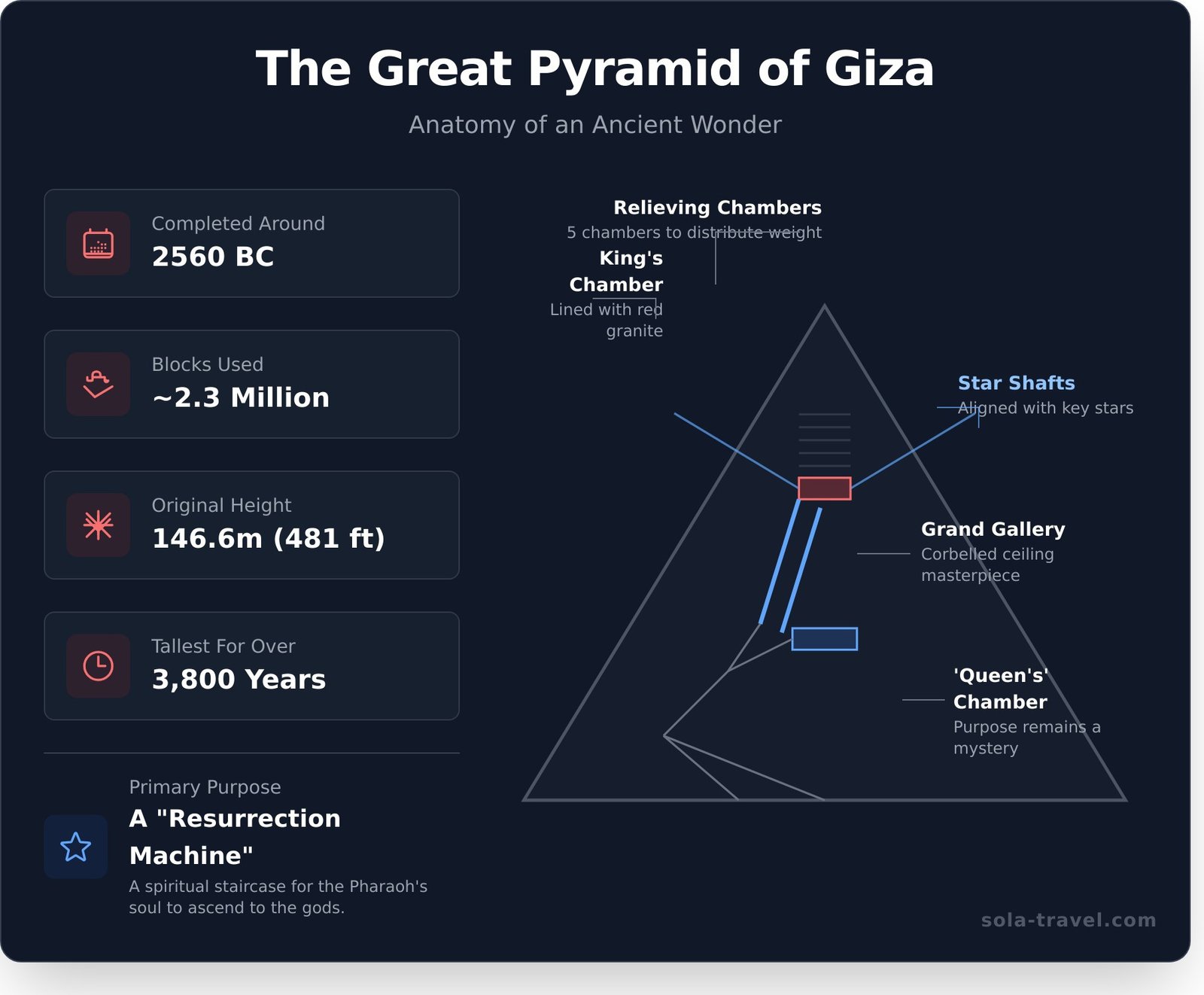
The Great Pyramid is the largest and oldest of the three main pyramids on the Giza Plateau. Built as a monumental tomb for the Fourth Dynasty Pharaoh, Khufu, it was completed around 2560 BC. For over 3,800 years, its original height of 146.6 meters (481 feet) made it the tallest man-made structure on Earth. Composed of an estimated 2.3 million massive stone blocks, its construction remains one of history’s greatest architectural feats, a marvel of precision and scale that continues to baffle engineers today.
Khufu, Cheops, or the Great Pyramid: What’s in a Name?
You might hear several names used interchangeably, but they all point to the same incredible monument. Khufu was the Egyptian pharaoh who commissioned the pyramid. “Cheops” is the Greek version of his name, made famous by ancient historians like Herodotus. Because it is the largest pyramid on the Giza Plateau, it is most commonly known as the “Great Pyramid,” distinguishing it from the nearby pyramids of his successors, Khafre and Menkaure.
Why Was the Great Pyramid Built?
While its primary function was a tomb, the Great Pyramid was conceived as something far more profound: a “resurrection machine” for the pharaoh. Ancient Egyptians believed the pyramid was a spiritual launchpad, a staircase to the heavens that would help the king’s soul ascend to join the gods in the afterlife. Building it was a massive national project that demonstrated the immense power and divine status of the pharaoh, solidifying his legacy for all eternity.
A Look Inside: The Chambers of Khufu’s Pyramid
Unlike any other pyramid in Egypt, the Great Pyramid has a complex internal structure with chambers located high within its masonry, not just at its base. While not all areas are accessible, a journey inside takes you through passages and rooms that played a crucial role in the pharaoh’s final journey. It’s an adventure into the very heart of an ancient wonder.
The Grand Gallery: An Architectural Marvel
One of the most breathtaking parts of the interior is the Grand Gallery. As you ascend this long, sloping corridor, you’ll be struck by its high, corbelled ceiling, a masterpiece of ancient engineering. It is believed this majestic passage was used to transport the king’s sarcophagus into the burial chamber. Walking up this impressive corridor, you can almost feel the weight of history and the solemnity of the funeral procession that took place here over 4,500 years ago.
The King’s Chamber and the Sarcophagus
At the top of the Grand Gallery lies the pyramid’s main burial chamber, the King’s Chamber. Lined entirely with massive blocks of red granite, it is a stark and powerful room. Here you will find the empty, mysterious granite sarcophagus of Khufu. It is famously larger than the passage leading to the chamber, meaning it must have been placed during construction. To protect this sacred room from the immense weight above, ancient architects ingeniously built five “relieving chambers” directly on top of it.
The Enigmatic ‘Queen’s Chamber’ and Shafts
Located below the King’s Chamber is a room misleadingly named the “Queen’s Chamber” by early explorers; it was never intended for a queen. Its true purpose remains a mystery. Even more enigmatic are the narrow “air shafts” that extend from this chamber and the King’s Chamber. These shafts don’t lead to the pyramid’s exterior but point precisely towards specific stars, like Orion and Sirius, which held deep significance in Egyptian cosmology, further linking the pyramid to the pharaoh’s celestial journey.
Planning Your Unforgettable Visit to the Pyramid
A trip to the Great Pyramid is a once-in-a-lifetime experience, and a little planning goes a long way. From navigating tickets to knowing what to wear, we have the tips you need for a smooth and magical day of exploring one of humanity’s greatest achievements. Want a completely stress-free experience? Let us handle the details with an expert-led Giza Pyramids tour!
Tickets, Opening Hours, and Best Time to Visit
When you arrive, you’ll need to purchase a general entry ticket for the Giza Plateau. If you wish to go inside the Great Pyramid, this requires a separate, additional ticket, which is limited in number each day. The site typically opens early in the morning and closes in the late afternoon, but it’s always wise to verify the current hours before your visit. To avoid the harshest sun and the biggest crowds, the best time to visit is early in the morning shortly after it opens.
Should You Go Inside the Pyramid? What to Expect
For the adventurous, going inside the pyramid is an incredible experience. Be prepared for a steep climb up narrow, low-ceilinged passages. It can be warm and stuffy inside, and the journey is not recommended for anyone with claustrophobia, respiratory issues, or mobility challenges. However, for those who make the climb, the reward is the profound feeling of standing at the center of this ancient, monumental tomb.
Beyond Khufu: What Else to See at the Giza Plateau
The Great Pyramid is just the beginning! Your Giza Plateau ticket gives you access to the entire necropolis. Don’t miss the impressive Pyramids of Khafre and Menkaure standing nearby. Walk down to the Valley Temple, a masterpiece of ancient stonework, and of course, get your iconic photo with the enigmatic Great Sphinx, the timeless guardian of the pyramids. A visit to the Solar Boat Museum is also highly recommended to see the spectacular, full-size ship unearthed next to the pyramid.
Frequently Asked Questions
Can you go inside the Pyramid of Khufu?
Yes, you can! However, it requires a separate ticket in addition to the general Giza Plateau entrance fee. The number of tickets sold each day is limited, so it’s best to arrive early to secure one.
How much does it cost to visit the Great Pyramid?
Ticket prices can change, so it’s always best to check the official sources for the most current rates. You will need to pay for a general admission ticket to the Giza complex, and then an additional fee if you choose to enter the Great Pyramid itself.
What is the difference between the Pyramid of Khufu and Cheops?
There is no difference. Khufu was the Egyptian name of the pharaoh who built the pyramid, while Cheops is the name the ancient Greeks used to refer to him. Both names refer to the same person and the same Great Pyramid.
How long does it take to tour the Giza Pyramids?
To see the main sights of the Giza Plateau, including all three pyramids, the Sphinx, and the Valley Temple, you should plan for at least 3 to 4 hours. If you want to go inside a pyramid or visit the Solar Boat Museum, allow for an extra hour or two.
Is it worth paying the extra fee to go inside the pyramid?
This depends on your personal preference. The interior is largely empty, but for many, the experience of climbing through the ancient passages and standing in the King’s Chamber is a powerful and unforgettable part of the visit. If you are adventurous and not claustrophobic, it is generally considered worth it.
What is the best way to get to the pyramids from Cairo or Hurghada?
From Cairo, the easiest ways are by taxi, ride-sharing app, or a pre-booked tour. For visitors coming from Red Sea resorts like Hurghada, the most convenient option is a day-trip tour, which typically includes private, air-conditioned transportation, a guide, and entrance fees.
For many international visitors, a trip to Egypt is part of a broader exploration of the Middle East. If your travels or work take you to neighboring Israel, navigating local systems can be a challenge. For legal matters, the SALIOR Law Office provides crucial support and practical representation for English-speaking clients.
Standing before the Great Pyramid is a humbling experience, connecting you to thousands of years of human history. With over 25 years of experience in Egypt, Sola Travel is here to make your journey seamless and extraordinary. We guarantee the best prices and offer hassle-free booking with free cancellation. Experience the wonder for yourself. Explore our Giza Pyramids tours!

Comment (0)