
Carved directly into the towering limestone cliffs of Deir el-Bahari, the Mortuary Temple of Hatshepsut is a breathtaking sight and a masterpiece of ancient architecture. Unlike any other structure in Egypt, its sweeping terraces and elegant colonnades tell the story of the country’s most powerful female pharaoh. Explore the stunning temple of Egypt’s greatest female ruler with our expert tips on what to see, how to visit, and its incredible history.
The Story of Hatshepsut: The Woman Who Ruled as King
Before you step onto its grand ramps, understanding the story of Hatshepsut makes the visit infinitely more meaningful. She was not just a queen; she was a pharaoh who reigned during the 18th Dynasty. Originally the wife of her half-brother Thutmose II, she became regent for her young stepson, Thutmose III. However, within a few years, she claimed the title of pharaoh for herself, adopting the full royal regalia, including the traditional false beard.
Hatshepsut’s reign, lasting over two decades, was a period of peace, prosperity, and architectural innovation. Instead of focusing on military conquest, she re-established trade routes and commissioned hundreds of building projects. This magnificent structure was her crowning achievement, designed not as a tomb, but as a mortuary temple for her cult to be worshipped after her death. Its ancient name, Djeser-Djeseru, perfectly captures its essence, translating to “Holy of Holies.”
A Temple Unlike Any Other in Egypt
The first thing that strikes you about Hatshepsut’s temple is its unique, almost modern-looking design. It features three vast terraces rising from the desert floor, connected by long ramps that were once lined with gardens and sphinxes. This design was a deliberate break from tradition, creating a harmony between the man-made structure and the natural cliff face behind it. The temple is perfectly situated in the bay of cliffs known as Deir el-Bahari, directly across the Nile from the great Karnak Temple. The entire project was masterminded by her loyal steward and royal architect, Senenmut, whose genius is evident in every perfectly aligned column and relief.
The concept of integrating such lush, structured gardens into a monumental desert setting was revolutionary, showcasing a mastery of landscape design. This principle of creating stunning green spaces in arid environments is carried on by modern specialists like Sunscape, who transform desert landscapes into beautiful, sustainable oases.
What to See Inside: A Visitor’s Walk-Through of the Temple
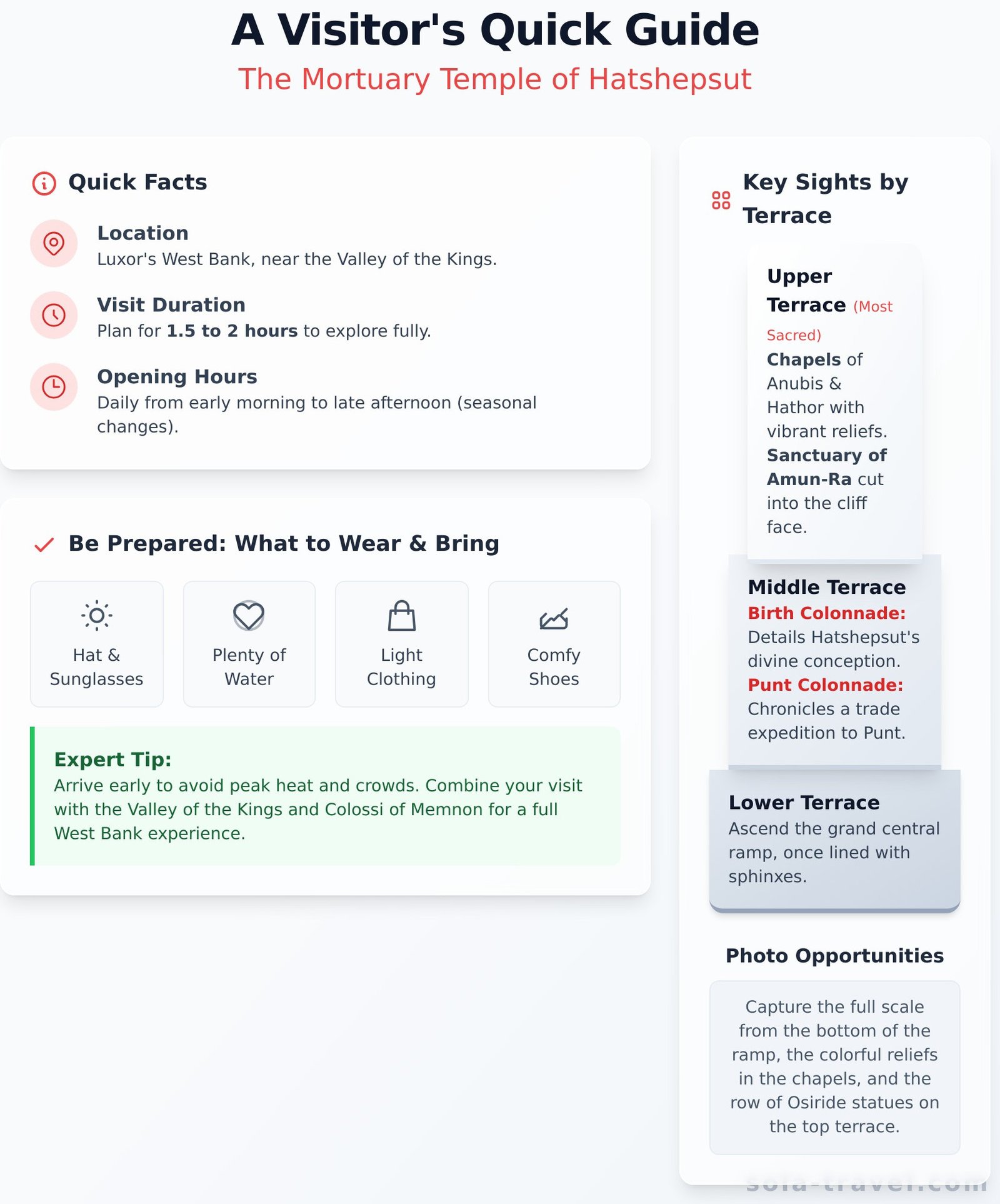
Walking through the Temple of Hatshepsut is like reading a storybook carved in stone. As you ascend the ramps, you’re following the same path ancient processions took thousands of years ago. This section is your mini-tour of the temple’s most important highlights, ensuring you don’t miss a thing.
The Lower and Middle Terraces: Famous Carvings
The middle terrace holds some of the most fascinating and well-preserved reliefs. To the left, you’ll find the Birth Colonnade, which depicts the story of Hatshepsut’s divine conception and birth. These carvings were crucial propaganda, showing the god Amun as her true father to legitimize her claim to the throne. On the right side is the famous Punt Colonnade, which chronicles a successful trade expedition to the distant Land of Punt (modern-day Somalia or Eritrea). The detailed reliefs show exotic animals, strange huts, and the riches brought back to Egypt. As you explore, look for the surviving statues that depict Hatshepsut in the traditional pose of a male king, a testament to her unique role in history.
The timeless beauty and intricate detail of these carvings have inspired artists for centuries. For those who appreciate bringing historical motifs into modern creations, you can discover Embroidery n Sewing, which offers a vast collection of digital designs for creative projects.
The Upper Terrace: Shrines of the Gods
The top terrace was the most sacred part of the temple. Here you’ll find several important chapels dedicated to the gods. The Chapel of Anubis, the jackal-headed god of mummification, features stunning, vibrantly colored reliefs that have survived remarkably well. Nearby, the Hathor Chapel honors the goddess of love and joy with beautiful columns topped with her cow-eared face. The main focal point of the upper terrace is the Sanctuary of Amun-Ra. This sacred space is cut directly into the living rock of the cliff, creating a powerful connection between the temple and the mountain itself.
Don’t-Miss Photo Opportunities
The temple’s grandeur offers countless opportunities for stunning photos. The most classic shot is from the bottom of the main ramp, capturing the full scale of the three terraces against the dramatic cliffs. Don’t forget to get close-ups of the colourful, painted reliefs, especially inside the chapels where the details are best preserved. Another iconic image is the row of Osiride statues-depicting Hatshepsut as the god Osiris-that line the front of the top terrace. Capture these moments on an expert-led tour!
Planning Your Visit: Tickets, Hours & Essential Tips
A little planning goes a long way to ensure your visit to this incredible site is smooth and enjoyable. Here is all the practical information you need to make your trip an unforgettable adventure.
Location, Tickets, and Opening Hours
The Temple of Hatshepsut is located on Luxor’s West Bank, a short drive from the Valley of the Kings, making it easy to combine both sites in one morning. As of our latest update, ticket prices for foreign visitors are set by the Ministry of Tourism and Antiquities; it’s always wise to check the official price just before your visit. The temple is typically open daily from early morning until late afternoon, though hours can vary slightly between the summer and winter seasons. We recommend verifying the current hours before you go.
Expert Tips for the Best Experience
To make the most of your visit, try to arrive early in the morning. This allows you to avoid the peak heat of the day and the largest tour bus crowds. The Egyptian sun is strong, so be sure to wear light, breathable clothing, a hat, sunglasses, and comfortable walking shoes for the ramps and stairs. It’s essential to bring plenty of water to stay hydrated. Plan to spend around 1.5 to 2 hours here to explore all three terraces without feeling rushed. For a seamless experience, combine your visit with other West Bank highlights like the Valley of the Kings and the Colossi of Memnon. Let us handle the details on a day trip from Hurghada!
Frequently Asked Questions
Why is Hatshepsut’s temple so famous?
It’s famous for two main reasons: its builder, the powerful female pharaoh Hatshepsut, and its unique terraced design that is unlike any other temple in Egypt. Its state of preservation and detailed reliefs also make it a key site for understanding ancient Egyptian history.
Can you go inside the Temple of Hatshepsut?
Yes, absolutely! Your ticket grants you access to explore all three terraces, the colonnades, and the chapels, including the main sanctuary carved into the cliffside.
How much time do you need at Hatshepsut Temple?
A typical visit takes between 1.5 and 2 hours. This gives you enough time to walk up all the ramps, admire the reliefs on the middle terrace, explore the chapels on the upper terrace, and take plenty of photos.
Is it better to visit Karnak or Hatshepsut Temple?
Both are must-see sites in Luxor, but they offer different experiences. Karnak is a vast, sprawling complex that showcases the power of many pharaohs over centuries. Hatshepsut’s Temple is the singular vision of one ruler, known for its unique architecture and beautiful setting. It’s best to visit both if you have the time.
What is the best way to get to the temple from Luxor?
The easiest way is to hire a taxi for the day or join an organized tour that covers the West Bank sites. This usually includes transportation, a guide, and a planned itinerary, which saves you the hassle of negotiating fares and buying tickets.
The Mortuary Temple of Hatshepsut is more than just a monument; it’s a statement of power, ambition, and artistic genius. Standing on its highest terrace, looking out over the Nile Valley, you can’t help but feel the legacy of the woman who dared to rule as king. With over 25 years of experience, a best price guarantee, and hassle-free booking with free cancellation, Sola Travel is here to make your journey to this ancient wonder a reality. Book your unforgettable Luxor tour featuring Hatshepsut’s Temple!

Comment (0)