
You haven’t truly experienced the Nile until you’ve stood between the towering talons of a falcon and the ancient jaws of a crocodile without a single tour bus in sight. Most travelers find that an Edfu and Kom Ombo temples visit is the absolute highlight of their Egyptian journey, yet many miss the most captivating details because they’re stuck in the 10:00 AM rush. It’s understandable to feel overwhelmed by the puzzle of ferry schedules or the fear of overpaying E£ 700 for a private transfer. We agree that your focus should be on the 2,000 year old stories etched in stone, not on dodging scams or rushing through sacred halls.
With our 25 years of local expertise, we’ve simplified the process to ensure your adventure is as smooth as it is magical. This guide promises to transform your trip into a bespoke experience by mastering every logistical hurdle and revealing the hidden mythology of Horus and Sobek. You’ll get a clear itinerary to avoid the crowds, practical photography tips, and the confidence to explore these riverside gems like a seasoned pro. Here is everything you need to know to plan your perfect 2026 journey through the heart of Upper Egypt.
Why an Edfu and Kom Ombo Temples Visit is Unmissable in 2026
Your 2026 Egyptian adventure isn’t complete without witnessing the architectural wonders of the Nile Valley. An Edfu and Kom Ombo temples visit offers a rare look at the Ptolemaic era, a period between 305 BCE and 30 BCE when Greek rulers blended their culture with Egyptian traditions. These two sites provide a striking contrast in design and purpose. Edfu sits majestically on the west bank, while Kom Ombo occupies a strategic high point on the east bank. They represent the absolute peak of late-period temple construction.
These monuments are world-famous because they’re the best-preserved examples of ancient Egyptian religious architecture. While older temples like Karnak suffered from centuries of flooding or stone recycling, these sites remained largely protected. They allow you to walk through complete roofed halls and dark sanctuaries exactly as the priests did 2,000 years ago. You’ll experience the “Falcon Temple” of Edfu, dedicated to the sky god, and the “Double Temple” of Kom Ombo, which balanced the worship of two distinct deities. It’s a magical journey through Egypt’s sacred history.
- Historical Context: Construction at Edfu began in 237 BCE, while Kom Ombo followed around 180 BCE.
- Geographic Split: Edfu represents the traditional west bank funerary and solar associations; Kom Ombo serves as a riverside guardian.
- Preservation: Both sites benefit from the dry desert climate, keeping carvings sharp and legible for 2026 visitors.
The Best-Preserved Sanctuary: Temple of Horus at Edfu
The Temple of Horus at Edfu stayed hidden for nearly two millennia. Desert sands buried the structure up to a depth of 12 meters, protecting the interior from the elements. This accidental preservation means the 36-meter-high Great Pylon remains virtually intact. When you enter, you’re stepping into the primary source for ancient Egyptian ritual data. The walls contain thousands of inscriptions detailing the “Sacred Drama” and the victory of Horus over Set. It’s a bespoke history lesson carved in stone.
The Unique Symmetry of Kom Ombo
Kom Ombo is an architectural anomaly. It’s a perfectly symmetrical double temple designed to prevent jealousy between two gods. The southern half belongs to Sobek, the crocodile god of fertility. The northern half honors Horus the Elder, the heroic doctor god. Everything is doubled: two entrances, two colonnades, and two sanctuaries. This site was a vital trading post for gold and African elephants. You can still see the ancient Nilometer used to measure the river’s height, ensuring the town’s prosperity. It’s a smart, unforgettable stop on any luxury Nile itinerary.
Exploring the Temple of Edfu: The Realm of the Falcon God
The Temple of Horus at Edfu is a breathtaking monument to the falcon god. It remains one of Egypt’s most intact structures because it was buried under 12 meters of desert sand for centuries. You’ll feel the scale immediately as you approach the massive entrance pylon. Standing 36 meters tall, it features towering reliefs of King Ptolemy XII smiting his enemies. Beyond this gateway lies the Court of Offerings. This wide courtyard was once the only part of the temple accessible to the public. Today, you can stand between the famous granite falcon statues that guard the inner entrance. They’re perfect for photos before you head into the shadows.
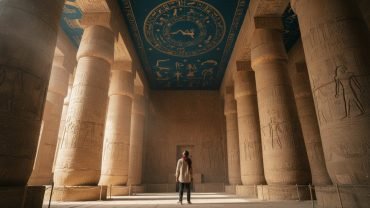
Planning your Edfu and Kom Ombo temples visit requires a bit of strategy to avoid the crowds that arrive via cruise ships. Once inside the Hypostyle Hall, look up. The ceilings are blackened by soot. This isn’t a design choice. It’s the result of fires lit by locals who used the temple as a shelter before it was excavated in 1860. This site is currently part of the UNESCO tentative list for Pharaonic temples, which proves its status as a world treasure. At the heart of the complex lies the Holy of Holies. You can stand in the exact spot where the sacred barque, a ceremonial boat used to carry the god’s statue, once rested on its granite pedestal.
Decoding the Walls: The Myth of Horus and Set
Walk through the inner corridor to find the most famous reliefs in Edfu. These carvings show Horus defeating a small hippopotamus. This hippo represents Set, the god of chaos. Horus wears the Double Crown, symbolizing his rightful rule over a unified Egypt. These walls also detail the “Victory Festival.” This annual event was the biggest celebration in Edfu, drawing thousands of pilgrims from across the Nile Valley. It celebrated the triumph of order over chaos, a theme that defined ancient Egyptian life.
The Nilometer and Laboratory of Edfu
Don’t miss the “perfume laboratory” near the front of the temple. The walls contain inscribed recipes for sacred oils and incense like Kyphi. You can still see the lists of ingredients including myrrh and cinnamon. Nearby, the Nilometer is a deep stone well used to measure the river’s annual floods. In 2026, the entrance fee for foreigners is approximately E£450. These measurements were vital because they determined the tax rates for the year. High water meant a good harvest and higher taxes. For a bit of relief, the inner corridors stay naturally cool. They’re the best place to find shade during a midday tour. To make the most of your day, you can book a private guided tour to ensure you don’t miss these hidden details.
The Dual Wonders of Kom Ombo: Crocodiles and Ancient Medicine
The approach to Kom Ombo is one of the most breathtaking sights on your Nile journey. Most travelers arrive by boat, seeing the golden sandstone pillars rise dramatically from a high dune overlooking the river. This temple sits 45 kilometers north of Aswan and serves as a vital stop during your Edfu and Kom Ombo temples visit. It’s unique because of its “Double Design.” Unlike every other temple in Egypt, this structure is perfectly symmetrical. It features two identical entrances, two hypostyle halls, and two sanctuaries to honor two very different gods.
The southern half of the temple belongs to Sobek, the crocodile god of fertility and creator of the world. The northern half is dedicated to Haroeris, also known as Horus the Elder or the “Good Doctor.” This architectural balance reflects the ancient Egyptian belief in duality and harmony. While the core of the temple dates back to the Ptolemaic period, the Roman era brought significant changes. Under Emperor Augustus around 30 BC, builders added the massive outer corridor and the facade that stands today. While Edfu is famous for its preservation, as detailed in this Yale Egyptology overview of the Temple of Horus, Kom Ombo offers a unique scientific and dual-religious focus found nowhere else in Egypt.
The Crocodile Museum: Mummies of the Nile
Step inside the Crocodile Museum located right next to the temple exit to see over 22 preserved mummies. Ancient Egyptians mummified hundreds of crocodiles here because they revered them as the living image of Sobek. They believed that by feeding and honoring these predators, they could appease the dangers of the Nile. You’ll see mummies of all sizes, from hatchlings to massive adults, some still wrapped in original linen. These specimens were discovered in nearby pits and provide a fascinating, slightly eerie look at how faith influenced daily life along the riverbanks.
Ancient Medical Tools and the Calendar Relief
Kom Ombo wasn’t just a place of worship; it was a renowned center for healing. On the rear wall of the outer corridor, you’ll find a world-famous relief depicting surgical instruments. The carvings show scalpels, forceps, bone saws, and dental tools used by ancient physicians. Scholars believe these images prove that Egyptian medicine was centuries ahead of its time. Nearby, the intricate calendar relief lists the three seasons of the Egyptian year: Akhet (Inundation), Peret (Growth), and Shemu (Harvest). Your Edfu and Kom Ombo temples visit reveals how these ancient people tracked time and treated illness with incredible precision. Entry for the site in 2026 is approximately E£360 for international visitors, providing exceptional value for such deep historical insight.
How to Plan Your Visit: Logistics, Timing, and Pro-Tips
Your Edfu and Kom Ombo temples visit depends entirely on your starting point. Most travelers base themselves in Luxor or Aswan, but 2026 trends show a 30% increase in visitors booking long-distance day trips from Red Sea hubs. Whether you choose a classic Nile cruise or a private land tour, your strategy determines the quality of your photos and your energy levels. For travelers who love exploring ancient cultures by water, you can also visit India Cruise for similar experiences on the great rivers of India.
The Nile cruise vs. land tour debate is simple for photographers. Cruises offer a romantic, slow-paced journey. However, land tours provide the ultimate flexibility. When you travel by private car, you control the clock. You can arrive at Edfu at 7:00 AM, exactly 45 minutes before the massive cruise ship crowds descend on the site. This window is vital for capturing the Great Pylon without hundreds of people in your frame.
To stay energized during a full-day trip, follow these three rules:
- Hydrate aggressively: Drink at least 3 liters of water. The desert heat evaporates moisture faster than you feel it.
- Pack for 2026: Bring a high-capacity power bank and a cooling neck towel. Carry at least E£ 600 in small notes for tipping and site facilities.
- Manage the “Temple Wall”: Avoid reading every single inscription. Focus on the highlights mentioned in previous sections to prevent mental exhaustion.
Traveling from Hurghada or Marsa Alam
Expect a long day if you start from the coast. The drive takes between 4 and 5 hours each way. A 4:00 AM departure is mandatory to reach the temples before the midday heat peaks at 40°C. Many travelers choose to combine this journey with a Luxor day trip to see the best of Upper Egypt in one sweep. Always book a private car rather than a large tour bus. Private transfers cut travel time by roughly 60 minutes and allow for custom rest stops.
Timing Your Visit for the Best Experience
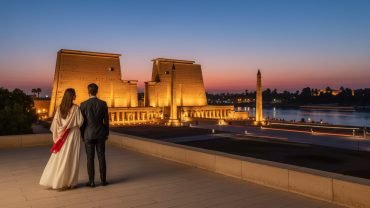
Timing is the difference between a stressful trip and a magical one. For Edfu, the 7:00 AM rule is your best friend. It allows you to explore the Temple of Horus in relative silence. For Kom Ombo, aim for the “Golden Hour” just before sunset. The sandstone glows a deep, fiery orange as the sun dips behind the Nile. Photography at this time requires a polarizing filter to manage the harsh glare. Once the sun sets, the temple is illuminated by floodlights, offering a completely different, dramatic perspective for your portfolio.
Ready to see these ancient wonders without the stress? Book your private Edfu and Kom Ombo adventure with our expert guides today.
Experience the Nile’s Hidden Gems with Sola Travel
Planning an Edfu and Kom Ombo temples visit requires more than just a map. It demands 25 years of local expertise to navigate the nuances of Upper Egypt correctly. Sola Travel transforms a standard sightseeing trip into a bespoke luxury experience that prioritizes your comfort. While generic group tours often leave you rushed or lost in a crowd of 40 people, our private guides focus entirely on your interests. We handle every logistical detail from Hurghada, Aswan, or Luxor. Our team uses modern, air-conditioned vehicles to ensure the four-hour drive from the Red Sea is as smooth as possible. We guarantee the best price for your 2026 excursion, with transparent E£ rates that eliminate the stress of currency fluctuations or haggling at the site.
Our Strict Screening for Expert Egyptologists
A great guide is the difference between looking at “just stones” and witnessing living history. Every Egyptologist at Sola Travel undergoes a rigorous screening process to ensure they possess both academic depth and storytelling flair. In Edfu, the transition from the vehicle to the temple can be overwhelming due to the local horse carriage system. Our guides manage this “horse carriage” chaos for you, handling the drivers and payments so you don’t have to. This ensures you reach the Temple of Horus safely and without hidden fees. You get full flexibility to linger at the Double Temple of Kom Ombo to photograph the crocodile mummies or skip ahead if you prefer. Our commitment is simple: no surprise costs, just a journey that’s completely yours.
Book Your Unforgettable Journey Magical
Securing your 2026 adventure early brings massive benefits to your travel budget. We currently offer special discounts of up to 50% for early bookings, making luxury travel accessible for everyone. Whether you’re coming from a resort in Hurghada or a hotel in Luxor, our “Pay Now or Pay Later” policy provides the flexibility you need for stress-free planning. You can cancel up to 24 hours before your trip for a full refund if your plans change. Private day tours for 2026 are already filling up, so locking in your E£ price now protects you from future increases. We create the trips you love by focusing on value, safety, and inspiration. Book your Edfu and Kom Ombo adventure today!
Secure Your 2026 Nile River Adventure
Walking through the massive pylons of Edfu and exploring the dual sanctuaries of Kom Ombo offers more than a history lesson. It’s a direct connection to the Falcon God Horus and the ancient medicinal secrets of Sobek. Your 2026 Edfu and Kom Ombo temples visit deserves the precision and local insight that only two decades of expertise can provide. Sola Travel has spent 25 years perfecting these routes to ensure you skip the crowds and find the hidden details most travelers miss.
We create the trips you love by blending luxury with unbeatable value. We offer a Best Price Guarantee on all our Egyptian excursions. You can book with total peace of mind because we provide free cancellation up to 24 hours before your tour begins. Don’t leave your dream holiday to chance when the wonders of the Nile are just a click away. Explore our Edfu and Kom Ombo Tour Packages and start your magical journey today.
The timeless beauty of the Nile is waiting for you.
Frequently Asked Questions
Is it better to visit Edfu and Kom Ombo from Luxor or Aswan?
Most travelers visit these sites while traveling between Luxor and Aswan on a 220km journey. Starting from Aswan puts you just 45km from Kom Ombo, while Luxor is roughly 110km from Edfu. A private car transfer is the most efficient way to see both in a single day without the fixed schedule of a cruise ship.
How much time do I need at each temple?
Plan for 90 to 120 minutes at Edfu to explore the massive pylon and the perfectly preserved inner sanctuary. Kom Ombo is smaller, so 60 to 90 minutes is usually enough to see the dual altars and the Crocodile Museum. These timeframes ensure you don’t miss the 2,000-year-old reliefs or the famous medical instrument carvings.
Are the horse carriages in Edfu the only way to reach the temple?
Horse carriages aren’t the only option, but they’re the standard transport from the Nile docks for cruise passengers. You can also hire a local tuk-tuk for about E£100 to E£150 for a round trip from the city center. If you arrive by private car, your driver can drop you directly at the visitor center parking lot for a more comfortable experience.
Can I visit both Edfu and Kom Ombo on a day trip from Hurghada?
Yes, you can book an Edfu and Kom Ombo temples visit as a day trip from Hurghada, though it’s a 16-hour journey. Expect a 4:00 AM start for the 300km drive to the Nile Valley. It’s an intense day of adventure, but our 50% discounts make this long-distance trek an incredible value for history lovers who want to see everything.
Is there an entrance fee for the Crocodile Museum at Kom Ombo?
Your entry to the Crocodile Museum is included in the standard Kom Ombo temple ticket price. As of 2024, the adult ticket costs E£360 for foreign visitors and E£180 for students with valid ID. This single ticket gives you access to the 22 mummified crocodiles on display and the entire archaeological site overlooking the Nile.
What is the best time of year to visit these temples?
The best time to visit is between October and April when daily temperatures stay between 20°C and 30°C. Avoid the summer months of June through August, as heat in Upper Egypt often exceeds 40°C by midday. Arriving at the gates at 7:00 AM offers the best light for photos and helps you beat the large cruise crowds.
Are the temples at Edfu and Kom Ombo accessible for travelers with mobility issues?
These ancient sites offer limited accessibility, but recent improvements have added paved paths to the main areas. Edfu Temple is mostly flat, though the ground is uneven and sandy in the outer courtyards. Kom Ombo has ramps leading from the entrance to the main platform, but travelers using wheelchairs should bring an assistant for the 25-meter incline.
What should I wear when visiting ancient Egyptian temples?
Wear lightweight, breathable cotton or linen to stay cool during your Edfu and Kom Ombo temples visit. While there’s no strict dress code, modest clothing that covers your shoulders and knees is respectful and protects you from the sun. Choose closed-toe walking shoes to navigate the 2,000-year-old stone floors and dusty paths safely.
Comment (0)